
DBT Therapy: Evidence-Based Treatment for Emotional Wellness
Dialectical Behavior Therapy (DBT) is a specialized form of psychotherapy designed to help individuals manage emotional dysregulation and improve interpersonal effectiveness. This comprehensive guide will explore the core principles of DBT, its origins, and its applications in treating various mental health conditions. Readers will learn about the four essential skills taught in DBT, the treatment process, and the benefits of this therapeutic approach. Many individuals struggle with intense emotions, leading to challenges in relationships and self-destructive behaviors. DBT offers a structured framework to address these issues effectively. This article will cover the history of DBT, the skills involved, its effectiveness for conditions like Borderline Personality Disorder (BPD), and how to access DBT services at Contemporary Behavioral Therapy.
What is Dialectical Behavior Therapy and Who Developed It?
Dialectical Behavior Therapy (DBT) is a cognitive-behavioral treatment developed by Dr. Marsha Linehan in the late 1980s and early 1990s. It was initially designed to treat individuals with Borderline Personality Disorder (BPD) but has since been adapted for various mental health issues, including anxiety, depression, and substance use disorders. DBT combines traditional cognitive-behavioral techniques with mindfulness practices, emphasizing the importance of balancing acceptance and change.
How Did Marsha Linehan Create DBT to Address Emotional Dysregulation?
Dr. Marsha Linehan, a psychologist, developed DBT after recognizing the need for a treatment that specifically addressed emotional dysregulation. Her personal experiences with mental health challenges informed her understanding of the complexities of emotional responses. Linehan's work led to the creation of a structured therapy that incorporates skills training, individual therapy, phone coaching, and group sessions, providing a comprehensive approach to managing intense emotions.
What Does the 'Dialectical' Concept Mean in DBT?
The term "dialectical" refers to the synthesis of opposites, emphasizing the balance between acceptance and change. In DBT, this concept is crucial as it encourages individuals to accept their current emotional state while simultaneously working towards positive change. This dual focus helps clients develop a more nuanced understanding of their emotions and behaviors, fostering resilience and adaptability.
What Are the Four Core DBT Skills for Emotional Regulation?
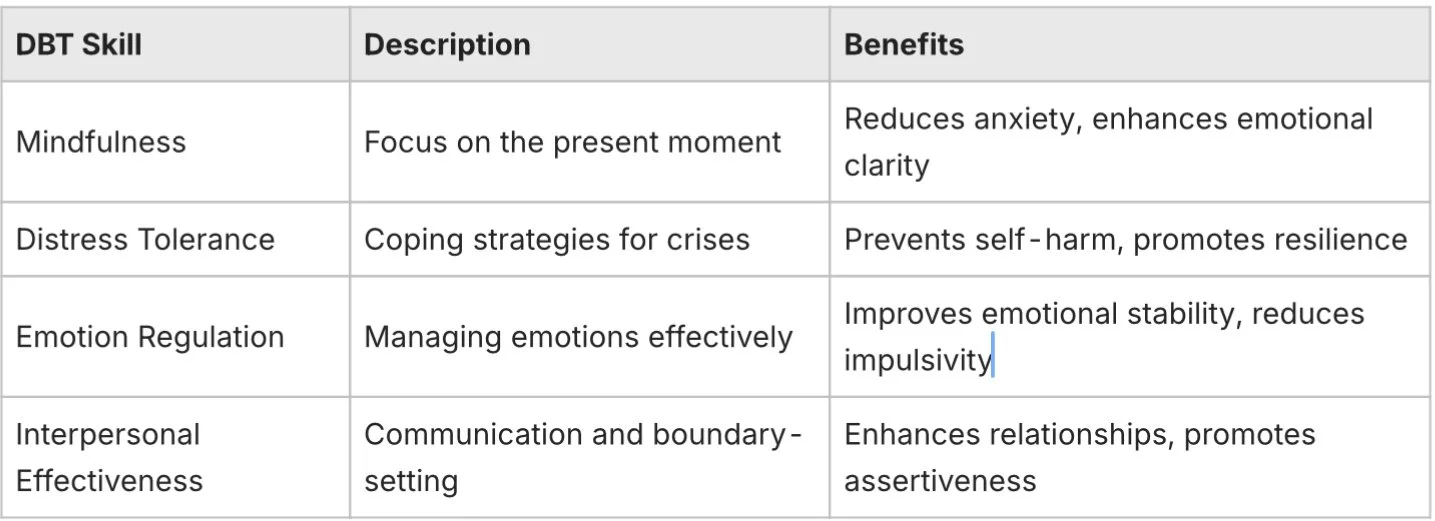
DBT is built around four core skill sets that are essential for emotional regulation: Mindfulness, Distress Tolerance, Emotion Regulation, and Interpersonal Effectiveness. Each skill set provides individuals with tools to manage their emotions and improve their relationships.
Indeed, research highlights the efficacy of DBT's skills training as a powerful intervention for emotional dysregulation.
DBT Skills Training for Emotion Dysregulation The skills training component of DBT is a successful stand-alone intervention for emotion dysregulation. Clinicians can use DBT skills training as a transdiagnostic treatment for emotion dysregulation. Dialectical behavior therapy: An intervention for emotion dysregulation, AD Neacsiu, 2014[1]
Mindfulness: This skill helps individuals focus on the present moment, enhancing awareness of thoughts and feelings without judgment. Mindfulness practices can reduce anxiety and improve emotional clarity.
Distress Tolerance: These techniques equip individuals with strategies to cope with crisis situations without resorting to harmful behaviors. Skills such as self-soothing, distraction, and radical acceptance are emphasized.
Emotion Regulation: This skill set teaches individuals how to identify and manage their emotions effectively. Techniques include recognizing emotional triggers and developing healthy coping strategies.
Interpersonal Effectiveness: This involves learning how to communicate needs and set boundaries while maintaining healthy relationships. Skills in this area help individuals navigate social interactions more effectively.
How Does Mindfulness Help You Live in the Present Moment?
Mindfulness in DBT encourages individuals to engage fully with their current experiences, promoting a non-judgmental awareness of thoughts and feelings. Techniques such as deep breathing and body scans help ground individuals in the present, reducing anxiety and enhancing emotional regulation. By practicing mindfulness, individuals can develop a greater understanding of their emotional responses, leading to improved coping strategies.
What Distress Tolerance Techniques Help Survive Crisis Situations?
Distress tolerance techniques are essential for managing overwhelming emotions during crisis situations. Key strategies include:
Self-Soothing: Engaging in activities that promote comfort, such as listening to music or taking a warm bath.
Distraction: Redirecting attention away from distressing thoughts through activities like reading or exercising.
Radical Acceptance: Acknowledging the reality of a situation without judgment, which can reduce emotional suffering.
These techniques empower individuals to navigate crises without resorting to self-destructive behaviors.
Studies further underscore how these core DBT skills, particularly mindfulness and distress tolerance, are crucial in improving clinical outcomes by reducing emotional distress and impulsive behaviors.
DBT Improves Emotional Distress & Impulsive Behaviors The effectiveness of dialectical behavior therapy (DBT) for improving clinical outcomes by reducing emotional distress and impulsive behaviors. Therefore, the aim of this study was to examine the independent roles of mindfulness and distress tolerance in treatment outcomes in DBT skills training. The independent roles of mindfulness and distress tolerance in treatment outcomes in dialectical behavior therapy skills training., RJ Zeifman, 2020[2]
DBT provides a structured and effective approach to managing emotional dysregulation and improving interpersonal relationships. By focusing on skill development and practical applications, individuals can achieve significant improvements in their mental health and overall quality of life.
How Does DBT Help Treat Borderline Personality Disorder and Related Conditions?
DBT has proven particularly effective in treating Borderline Personality Disorder (BPD), characterized by emotional instability, impulsive behavior, and difficulties in interpersonal relationships. The structured nature of DBT provides individuals with the skills needed to manage their symptoms effectively.
What Are the Benefits of DBT for Borderline Personality Disorder?
Research indicates that DBT significantly reduces symptoms of BPD, including self-harm and suicidal ideation. Patients often report improved emotional regulation and interpersonal relationships. Statistical evidence shows that individuals undergoing DBT experience a decrease in hospitalizations and an increase in overall quality of life.
How Does DBT Address Anxiety, Depression, and Emotional Dysregulation?
DBT's focus on emotional regulation makes it a valuable treatment for anxiety and depression. By teaching individuals to identify and manage their emotions, DBT helps reduce the intensity of negative feelings. Techniques such as mindfulness and distress tolerance provide patients with tools to cope with anxiety and depressive symptoms, leading to improved mental health outcomes.
What Does the DBT Treatment Process Look Like at Contemporary Behavioral Therapy?
At Contemporary Behavioral Therapy, the DBT treatment process is structured to provide comprehensive support for individuals seeking to improve their emotional regulation and interpersonal effectiveness. The program includes both individual therapy sessions, phone coaching, and group skills training.
What Are the Options for In-Person and Virtual DBT Therapy in Texas and Tennessee?
Contemporary Behavioral Therapy offers flexible options for DBT therapy, including in-person sessions in Spring, TX, and virtual services accessible throughout Texas and Tennessee. This accessibility ensures that individuals can receive the support they need, regardless of their location.
How Can You Schedule a Complimentary Consultation for DBT Therapy?
To schedule a complimentary consultation for DBT therapy, individuals can reach out to Contemporary Behavioral Therapy directly. During the consultation, potential clients can discuss their needs and learn more about the DBT program, including insurance and payment options.
What Are the Benefits and Outcomes of DBT Treatment?
DBT offers numerous benefits for individuals struggling with emotional dysregulation and related mental health conditions. The structured approach and skill-building focus lead to significant improvements in emotional control and interpersonal relationships.
How Does DBT Reduce Self-Harm and Improve Emotional Control?
DBT effectively reduces self-harm behaviors by teaching individuals healthier coping mechanisms. The skills learned in DBT empower clients to manage their emotions without resorting to harmful actions. As a result, many individuals experience a marked improvement in emotional stability and overall well-being.
Indeed, meta-analyses consistently demonstrate DBT's effectiveness in significantly reducing self-harming behaviors and negative emotions, particularly in patients with Borderline Personality Disorder.
DBT Effectiveness for Self-Harm & Negative Emotions DBT is effective in reducing self-harming behaviours and negative emotions in BPD. The findings demonstrated that DBT is effective in reducing self-harming behaviours and negative emotions in BPD. Effects of dialectical behaviour therapy on reducing self‐harming behaviours and negative emotions in patients with borderline personality disorder: A meta‐analysis, 2021[3]
What Evidence Supports the Effectiveness of DBT Therapy?
Numerous studies support the effectiveness of DBT in treating BPD and other mental health conditions. Research indicates that individuals who undergo DBT experience significant reductions in symptoms and improved quality of life. Meta-analyses have shown that DBT is more effective than traditional therapies for individuals with severe emotional dysregulation.
What Are the Costs, Insurance Options, and Accessibility of DBT Therapy?
Understanding the costs and insurance options for DBT therapy is crucial for individuals seeking treatment. Contemporary Behavioral Therapy aims to provide accessible mental health services to all clients.
Which Insurance Plans Does Contemporary Behavioral Therapy Accept for DBT?
Contemporary Behavioral Therapy accepts a variety of insurance plans for DBT therapy. Clients are encouraged to verify their coverage and discuss any questions with the administrative team to ensure a smooth process.
Are There Self-Pay and Sliding Scale Options for DBT Therapy?
For those without insurance or seeking alternative payment options, Contemporary Behavioral Therapy offers self-pay and sliding scale options for DBT therapy. This flexibility ensures that individuals can access the support they need, regardless of their financial situation.
References
Neacsiu, A. D. (2014). Dialectical behavior therapy: An intervention for emotion dysregulation.
Zeifman, R. J. (2020). The independent roles of mindfulness and distress tolerance in treatment outcomes in dialectical behavior therapy skills training.
Chou, Y. C., et al. (2021). Effects of dialectical behaviour therapy on reducing self‐harming behaviours and negative emotions in patients with borderline personality disorder: A meta‐analysis.
Here is some helpful DBT oriented reading material for patients and clinicians to include in their library. Click each to see a more detailed description and find a helpful link to purchase.
-
For the average clinician, individuals with borderline personality disorder (BPD) often represent the most challenging, seemingly insoluble cases. This volume is the authoritative presentation of dialectical behavior therapy (DBT), Marsha M. Linehan's comprehensive, integrated approach to treating individuals with BPD. DBT was the first psychotherapy shown in controlled trials to be effective with BPD. It has since been adapted and tested for a wide range of other difficult-to-treat disorders involving emotion dysregulation. While focusing on BPD, this book is essential reading for clinicians delivering DBT to any clients with complex, multiple problems.
Author: Marsha M. Linehan PhD